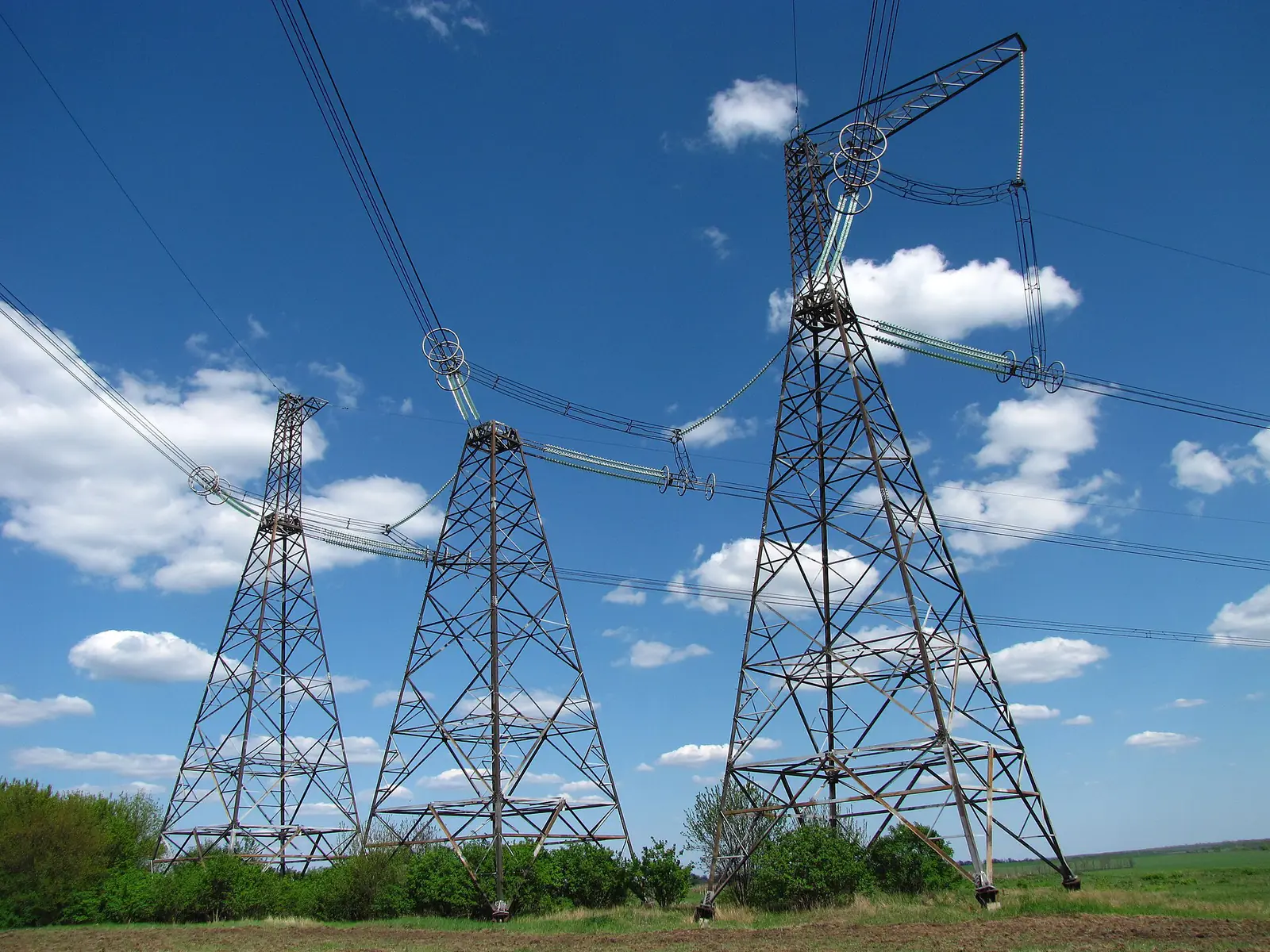

How IT, real estate and energy professionals can turn underutilized power into new digital infrastructure opportunities. Creating a new monetization layer for real estate, commercial facilities, and underutilized energy assets.
The Next Digital Infrastructure Opportunity May Already Be Connected to Your Clients
For decades, technology consultants have helped businesses modernize their operations by selling computers, networking equipment, telecommunications services, cybersecurity solutions, cloud subscriptions, and IT infrastructure.
Energy-to-compute introduces a new opportunity: helping businesses turn available electrical capacity into productive digital infrastructure.
Consider a commercial property with excess electrical capacity. A manufacturing facility operating below its original production capacity. An industrial site with access to natural gas and power generation. A telecommunications facility with available power and space. Or a business that has invested in electrical infrastructure but is not fully utilizing it.
Traditionally, unused capacity has been viewed as an operating inefficiency or simply a cost of maintaining a facility. But what if that capacity could support additional revenue?
What if a property owner could monetize surplus power by hosting dedicated computing hardware, supporting artificial intelligence workloads, providing on-premise computing services, or participating in Bitcoin mining?
This is the opportunity behind energy-to-compute: connecting energy resources with computing demand to create new sources of economic value.
And it is not just an opportunity for large energy companies, data center developers, or institutional investors. It could also create a new service category for IT consultants, technical sales professionals, independent business owners, and entrepreneurial networks.
1. What Is Energy-to-Compute?
Energy-to-compute is the process of connecting available energy capacity with computing infrastructure and commercial workloads.
Instead of treating electricity exclusively as an operating expense, an energy-to-compute solution evaluates whether available power, physical space, connectivity, cooling, and supporting infrastructure can be used to deliver computing services or generate revenue.
The concept brings together two fundamental requirements of the digital economy:
- Energy: The electricity, power infrastructure, and facilities required to operate computing equipment.
- Compute: The hardware and infrastructure required to process data, execute software, train or run AI models, host applications, or perform specialized workloads such as Bitcoin mining.
The commercial opportunity lies in matching the right computing application with the right energy environment.
For some businesses, that could mean deploying a small, dedicated compute system on-site. For others, it could involve hosting specialized hardware that serves remote customers. In suitable locations, it may mean supplying computing capacity to cloud markets or operating Bitcoin mining equipment.
Not every facility will be suitable for every application. Power costs, reliability, cooling, connectivity, operating conditions, capital requirements, and customer demand all influence feasibility.
But the underlying proposition is straightforward: where suitable power capacity exists, there may be an opportunity to develop a new digital infrastructure business.
2. Computing Infrastructure Is No Longer Exclusively a Hyperscale Business
The expansion of cloud computing, artificial intelligence, high-performance computing, and digital assets has increased demand for computing resources. Yet access to computing infrastructure remains shaped by capital, technical expertise, geography, and the availability of suitable facilities.
Large data centers are essential to the digital economy, but they are not the only possible deployment model.
Computing infrastructure can also be distributed across smaller facilities, industrial properties, commercial buildings, telecommunications sites, and other locations where the economics and operating conditions support deployment.
This creates an important distinction: a compute project does not always need to begin with a massive data center development.
A properly engineered 200-kilowatt deployment may be commercially meaningful. A collection of smaller deployments can serve customers whose requirements do not justify a dedicated megawatt-scale project. Larger sites can aggregate capacity as demand grows.
Distributed infrastructure creates the possibility of bringing computing closer to energy resources, business operations, and customers.
The objective is not to replace hyperscale data centers. It is to expand the range of locations, business models, and participants capable of supporting the growing digital economy.
3. Turning Underutilized Power Into a Monetization Layer
Real estate owners and facility operators already monetize their assets through rent, leases, storage, parking, telecommunications equipment, and other ancillary services.
Energy-to-compute offers another potential layer.
Imagine a property that has available electrical capacity, suitable space, and the ability to support additional computing equipment. Rather than undertaking an entirely new real estate development, the owner could investigate whether part of the existing infrastructure can accommodate a compute deployment.
Depending on the property and its operating constraints, the commercial model could include:
- Hosting computing equipment for a third-party operator.
- Leasing space and power capacity under a hosting agreement.
- Deploying dedicated hardware for a customer requiring on-premise compute.
- Providing computing resources to remote customers through a compatible marketplace.
- Operating Bitcoin mining equipment where energy economics and operating conditions are attractive.
- Supporting specialized AI or other computing workloads where hardware, connectivity, cooling, and customer demand align.
The revenue model depends on the arrangement. A property owner might receive rent or hosting fees. An infrastructure operator might earn service revenue. A hardware owner might earn compute rental revenue or workload-based income. Bitcoin mining introduces a different revenue model, with exposure to mining difficulty, network conditions, Bitcoin prices, and operating costs.
These models should not be confused with guaranteed returns. Each requires technical validation, commercial contracting, and an assessment of costs and risks.
Nevertheless, the strategic implication is significant: digital infrastructure could become an additional monetization layer for suitable properties and facilities that already have access to power.
This is where energy-to-compute begins to intersect with real estate, IT services, energy management, telecommunications, and business development.
4. A New Service Offering for Technology and Sales Professionals
The next generation of energy-to-compute adoption does not necessarily require every participant to become a data center engineer, power systems specialist, or computing infrastructure operator.
It creates an opportunity to separate business development from technical execution.
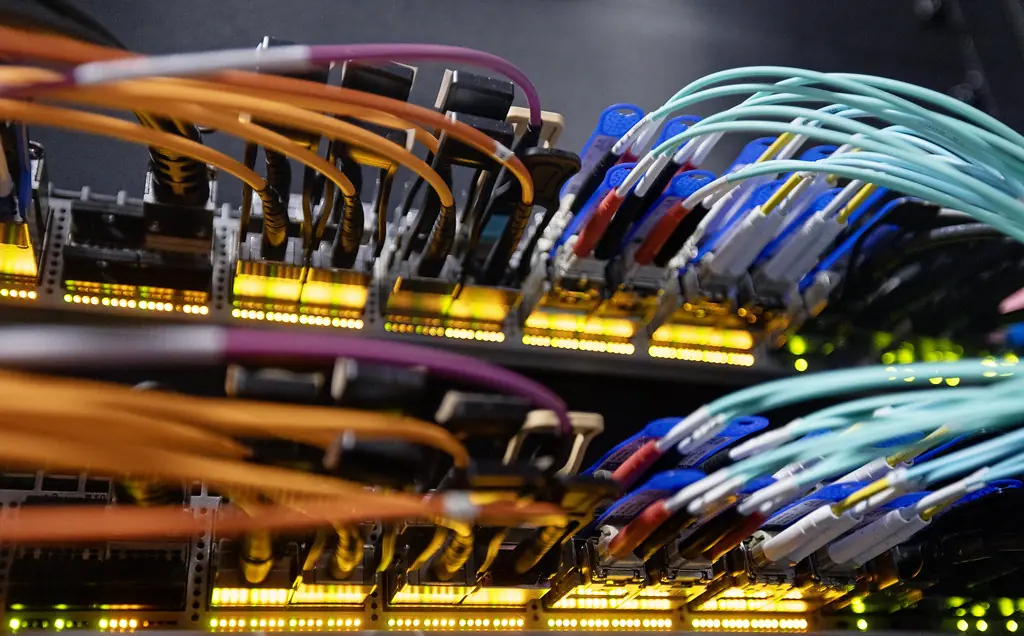
IT consultants already advise clients on hardware, networks, cloud migration, cybersecurity, and infrastructure planning. Technical sales professionals understand how to identify operational needs and introduce solutions. As professionals, you often have trusted relationships with business owners, property managers, developers, industrial operators, and professional service providers.
These existing relationships can become a channel for introducing energy-to-compute assessments.
A consultant could ask a client a question that traditional sales consultants rarely consider:
Does your facility have electrical capacity, space, or infrastructure that could support an additional computing service or revenue stream?
That question opens a new commercial conversation.
For certain professionals and consultants in IT and real estate, it could create an opportunity to introduce new revenue models such as on-premise computing or dedicated hardware services.
For a network infrastructure specialist, it could lead to an assessment of whether a site has the power, connectivity, and cooling needed to host additional equipment.
For a commercial real estate professional, it could introduce a new way to evaluate the productive potential of a property.
For an independent entrepreneur, it could create a pathway into the digital infrastructure sector without requiring them to finance and build an entire facility independently.
The professional’s role is to identify opportunities, qualify potential customers, facilitate introductions, and help connect clients with the appropriate technical and commercial resources.
The infrastructure provider handles the work that requires specialized expertise: feasibility assessments, equipment selection, deployment planning, integration, operations, and workload commercialization.
This is not simply another hardware sales proposition. It is a potential advisory and business development service built around the productive use of a property’s energy and digital infrastructure.
5. PermianChain: Connecting Power With Computing Demand
PermianChain has developed an energy-to-compute approach designed to connect energy suppliers, suitable facilities, computing infrastructure, and commercial demand.
The premise is that compute infrastructure should be deployable in different sizes and configurations, wherever the necessary power resources and operating conditions exist.
Rather than limiting the opportunity to large institutional developments, PermianChain’s model encompasses distributed deployments that can serve smaller commercial customers as well as larger industrial and institutional projects.
Potential applications include:
- On-premise computing: Dedicated hardware deployed at a customer’s facility to support selected workloads, subject to the site’s technical and operational requirements.
- Dedicated hardware rentals: Computing resources made available to customers who need access to specified hardware for a defined period, including hourly rental models where supported by the hardware and commercial platform.
- AI and other compute workloads: Infrastructure designed for suitable workloads requiring dedicated processing capacity, with equipment and deployment architecture matched to customer requirements.
- Bitcoin mining: Specialized computing equipment deployed where power economics, infrastructure, operating conditions, and mining-market dynamics make the project commercially viable.
Each application has different requirements. An AI workload may require particular accelerators, high-speed networking, and advanced cooling. Bitcoin mining has a different hardware profile and can have different connectivity and workload requirements. On-premise systems may prioritize data control, latency, or integration with existing business operations.
The opportunity is to match the application to the facility, not to force every facility into the same model.
For professionals introducing these opportunities, this creates a practical service proposition: identify the potential, establish whether it warrants further investigation, and connect the opportunity with an infrastructure solution capable of delivering it.
6. Why 200-kilowatt Clients Could Matter as Much as a 10–20-megawatt Project
One of the most important strategic questions is whether distributed energy-to-compute deployments can create meaningful commercial value at scale.
Consider the difference between pursuing one large institutional client and developing a portfolio of smaller commercial clients.
A 10-megawatt project can be strategically valuable, but it may involve extended negotiations, complex engineering, substantial capital requirements, regulatory considerations, and a concentrated source of execution risk.
A 200-kilowatt opportunity may be more accessible to a commercial property owner or industrial operator. Depending on the site, it may also be easier to assess, stage, and replicate.
The arithmetic illustrates why a distributed model deserves attention.
| Deployment model | Number of clients | Capacity per client | Total capacity |
|---|---|---|---|
| Distributed portfolio | 50 | 200 kW | 10 MW |
| Distributed portfolio | 100 | 200 kW | 20 MW |
| Institutional project | 1 | 10 MW | 10 MW |
| Institutional project | 1 | 20 MW | 20 MW |
Fifty 200-kilowatt deployments represent the same nominal capacity as one 10-megawatt project. One hundred represent the same nominal capacity as one 20-megawatt project.
That does not make the projects economically identical. Their profitability, deployment costs, utilization, operating expenses, contract terms, customer credit quality, and support requirements may differ substantially.
However, it reveals a powerful distribution strategy.
Instead of relying exclusively on a small number of large transactions, an infrastructure business can build a pipeline of smaller opportunities, qualify them systematically, and aggregate successful deployments into a larger portfolio.
This creates several potential advantages:
- A broader customer base: Less dependence on any single customer or project.
- Repeatable deployment processes: Standardized assessments and equipment configurations may reduce the effort required to evaluate subsequent sites.
- Multiple business development channels: Independent consultants and specialist partners can introduce opportunities across different industries and regions.
- Incremental growth: Projects can be developed in stages as demand, capital, and operating capabilities become available.
- Portfolio aggregation: Smaller deployments can collectively form a substantial distributed infrastructure network.
The central idea is not that every 200-kilowatt project is automatically attractive. It is that a repeatable, well-qualified 200-kilowatt opportunity can be a meaningful building block in a larger infrastructure business.
For a company like PermianChain, the long-term opportunity is to develop the processes and partner network that make these smaller deployments commercially manageable at scale.
7. From Traditional Selling to Infrastructure Opportunity Development
Traditional technology sales often begin with a product: a server, a software subscription, a network upgrade, or a cloud service.
Energy-to-compute encourages a different starting point: the customer’s assets, infrastructure, and unmet needs.
The professional is not merely selling a piece of equipment. They are helping identify a potential economic use for existing resources.
A practical opportunity development process could follow five steps.
- Step 1: Identify the facility. Find a commercial, industrial, agricultural, telecommunications, or other property that may have surplus electrical capacity, suitable space, or an existing need for dedicated computing.
- Step 2: Qualify the opportunity. Gather preliminary information about available power, electricity costs, operating hours, connectivity, cooling, space, ownership, and the facility’s restrictions.
- Step 3: Match the use case. Determine whether the site may be appropriate for on-premise computing, dedicated hardware hosting, AI workloads, Bitcoin mining, or another application.
- Step 4: Introduce the technical and commercial team. Refer qualified opportunities to the infrastructure provider for engineering review, financial evaluation, commercial structuring, and deployment planning.
- Step 5: Support the relationship. Where appropriate, help coordinate the customer relationship, follow-up, and additional opportunities as the deployment progresses.
The initial assessment does not establish that a project is viable. It determines whether the opportunity merits further work.
This approach allows business development professionals to contribute value without representing themselves as electrical engineers, guaranteeing performance, or making unsupported claims about profitability.
It also gives infrastructure providers a way to extend their market reach through people who already understand their local business communities.
8. Who Could Participate in the Energy-to-Compute Economy?
The potential participant base extends beyond traditional energy and data center industries.
- IT consultants and managed service providers can explore compute infrastructure as an extension of their existing client relationships, particularly where customers need dedicated hardware or on-premise solutions.
- Technical sales consultants can develop a specialized offering around identifying power-backed compute opportunities and qualifying facilities for assessment.
- Telecommunications and networking professionals can help evaluate connectivity, network architecture, and the infrastructure needed to support suitable computing workloads.
- Commercial real estate professionals can introduce property owners and landlords to potential uses for suitable surplus power and space.
- Energy consultants and facility managers can help identify sites where power capacity, operating conditions, and infrastructure may justify a compute feasibility study.
- Independent entrepreneurs and referral partners can build a network of prospective customers, coordinate introductions, and develop a focused business around opportunity sourcing.
- Industrial operators and business owners can investigate whether their own facilities can support a complementary revenue stream or meet an internal computing requirement.
The opportunity is not limited to one professional background. What matters is the ability to identify a credible need, establish a relationship with the decision-maker, gather relevant information, and connect the opportunity with a capable delivery partner.
For independent professionals, this could become a new specialization at the intersection of energy, real estate, computing, and infrastructure services.
9. Building a Network Around Infrastructure, Not Hype
There is a meaningful difference between building a network that promotes a product and building a network that develops real commercial opportunities.
An effective energy-to-compute partner network should be based on qualified prospects, technically viable sites, transparent commercial arrangements, and deployments that can actually be delivered.
A professional introducing an opportunity should understand the basics of the service, know what information is required for an initial assessment, and communicate clearly about what remains unverified.
Compensation could take different forms depending on the business model and applicable law, including referral fees, business development agreements, consulting fees, or other contractually defined arrangements.
Those arrangements should be disclosed, documented, and structured in compliance with applicable rules. Referral partners should not imply that they are authorized to provide regulated financial advice, promise investment returns, or guarantee project approval. Where a model includes commissions, recruitment, or multi-level compensation, it requires careful legal review; compensation should be tied to legitimate business activity rather than merely recruiting additional participants.
The strongest network is one in which each participant creates measurable value: introducing a qualified client, identifying a suitable facility, facilitating a technical assessment, or helping bring a viable project into operation.
This is how a distributed infrastructure opportunity can develop into a professional service ecosystem.
10. The Opportunity Ahead
The digital economy depends on computing. Computing depends on infrastructure. And infrastructure depends, among other things, on reliable access to energy.
As demand for AI, cloud services, data processing, and specialized computing evolves, the industry will continue to explore different ways to provision and operate computing capacity.
Not every solution will be centralized. Not every facility will be suitable for hosting compute. And not every project will produce an attractive return.
But the opportunity to connect underutilized power with productive computing capacity deserves a place in the commercial toolkit of technology consultants, facility operators, property owners, and independent entrepreneurs.
For professionals, the question is no longer limited to which technology product they can sell next. It is whether they can help their clients discover new uses for assets and infrastructure they already possess.
For property owners, it is whether surplus capacity could support a viable additional service or revenue stream.
For infrastructure providers, it is whether a repeatable network of smaller deployments can be developed alongside larger institutional projects.
And for PermianChain, the ambition is to help connect these participants by building distributed compute infrastructure, large and small, wherever the energy resources, technical conditions, and commercial demand align.
The next infrastructure opportunity may not require every participant to build a data center. It may require them to recognize the potential of the power and facilities already around them — and know whom to call to turn that potential into a real project.
Energy-to-compute is an invitation to look at existing infrastructure differently: not simply as a cost to manage, but as a potential platform for new digital services and commercial opportunity.
Explore an Energy-to-Compute Opportunity With PermianChain
Are you an IT consultant, technical sales professional, independent entrepreneur, property owner, or facility operator interested in exploring this emerging market?
PermianChain is interested in connecting with professionals who can identify potential sites, introduce qualified business customers, and help uncover opportunities for distributed compute infrastructure.
If you have relationships with businesses that may have available power capacity — or customers looking for dedicated computing solutions — there may be an opportunity to work together.
Start with one question: Who in your network could benefit from putting available power to productive use?
Learn more about PermianChain and explore how energy-to-compute could become part of your next business opportunity.
Important note: Energy-to-compute projects are subject to technical feasibility, site suitability, customer demand, commercial terms, and operating risks. No deployment, revenue, or return is guaranteed. Any partner or referral arrangement is subject to applicable contractual and regulatory requirements.