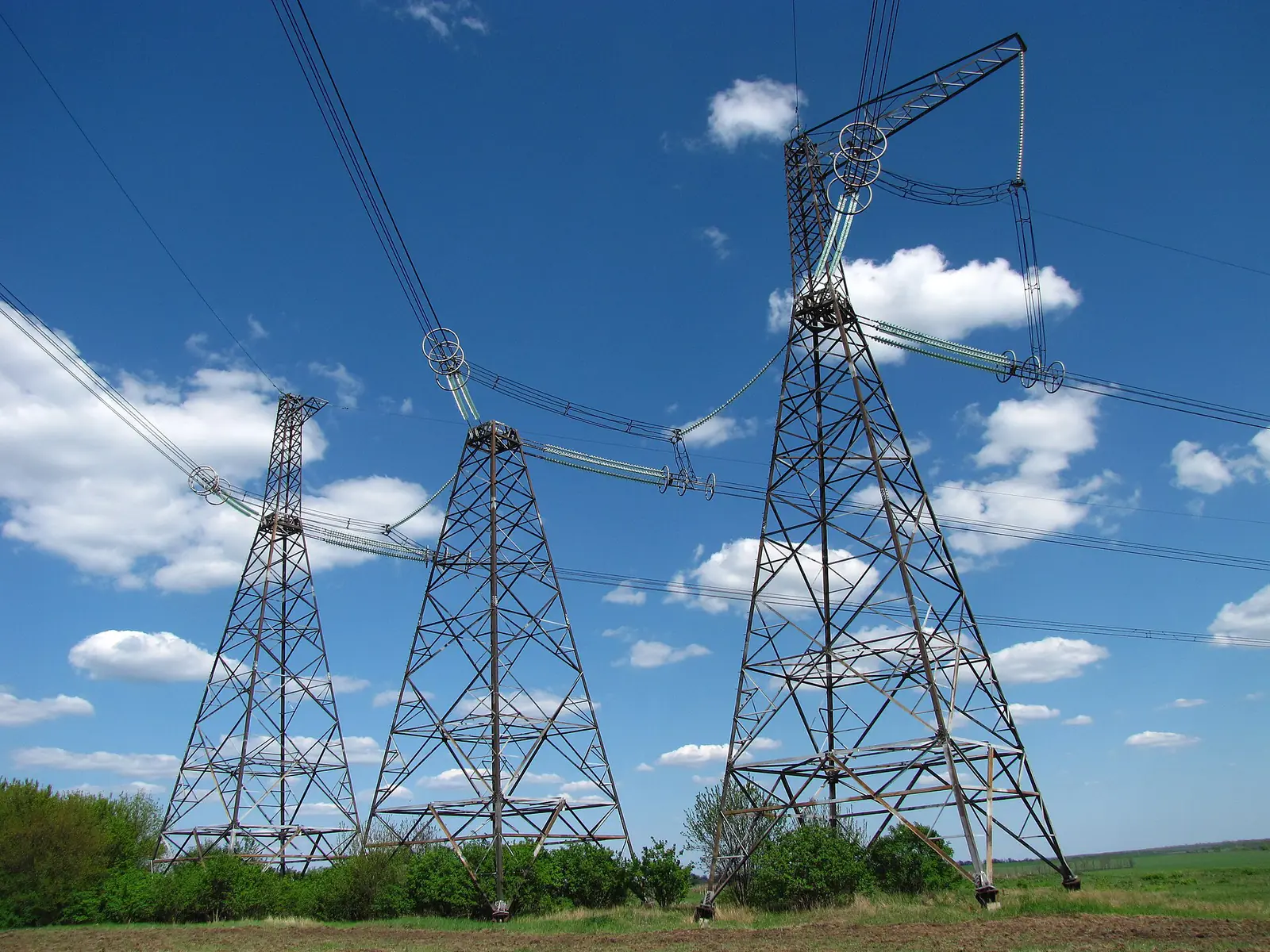
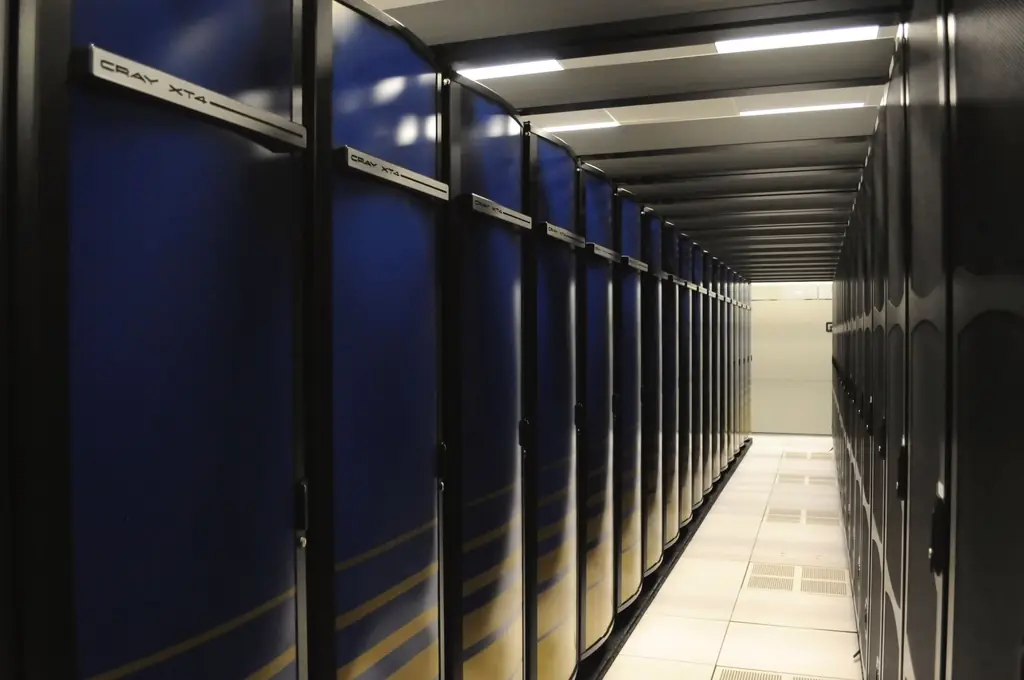
Why North America should transform its shared energy advantage into the distributed computing infrastructure that will power the next generation of the global economy
What if the next great chapter of Canada–U.S. economic cooperation isn’t built around trading more commodities, but around transforming shared energy resources into the computing infrastructure that powers the next generation of the global economy?
For generations, the economic relationship between Canada and the United States has been strengthened by an extraordinary exchange of natural resources, energy, capital, technology, goods and services. Integrated supply chains, cross-border energy infrastructure and deep commercial relationships have made the two countries among each other’s most important economic partners.
That relationship has been built on a simple principle: each country contributes capabilities that make the other more competitive.
But the global economy is entering a new infrastructure cycle. Artificial intelligence is changing how industries operate, how economies compete and how national capabilities are defined. The next generation of economic leadership will depend not only on access to energy or advanced technology, but on the ability to bring them together at scale.
This creates an opportunity to rethink the North American economic relationship.
Canada and the United States could move beyond the traditional exchange of energy commodities and begin building a shared advantage in energy-enabled artificial intelligence infrastructure: a distributed network of strategically located computing facilities, powered by reliable energy resources, equipped with advanced computing systems and capable of supporting commercial, industrial and sovereign AI applications.
The opportunity is not to replace the existing energy relationship. It is to build a new layer of economic value on top of it.
1. The next strategic resource is computing capacity
Artificial intelligence is often discussed as a software revolution. In reality, it is also an infrastructure revolution.
Advanced AI models require enormous computing resources. Training, inference, enterprise deployment and industrial applications all depend on access to high-performance computing, networking, storage, cooling and, above all, reliable power.
The infrastructure required to support this transformation is becoming a strategic economic asset.
Countries and companies that can secure the energy, land, infrastructure, technology and computing capacity needed to develop and deploy AI will have an advantage in attracting investment, building industries and retaining intellectual property.
Canada has important foundations on which to build. It has substantial energy resources, established electricity and natural gas infrastructure, engineering capabilities, a strong technology ecosystem and proximity to the world’s largest technology market.
The Canadian government has itself identified sovereign computing, domestic data-centre capacity and reliable energy as important elements of its AI strategy. Its national AI strategy recognizes that Canada must expand its domestic computing infrastructure while developing the broader value chain that connects energy, data centres, hardware, networks, models and applications.
The United States brings complementary strengths: a deep technology and capital ecosystem, leading AI companies, advanced semiconductor and infrastructure supply chains, and substantial demand for computing capacity.
The strategic opportunity is to connect these strengths.
Rather than treating energy and AI as separate industries, North America can develop an integrated value chain in which energy resources are converted into computing capacity, computing capacity supports AI innovation, and AI applications improve productivity across the industries that underpin both economies.
2. From exporting energy to exporting energy-enabled intelligence
Canada is already an essential energy supplier to the United States.
In 2025, Canadian exports of crude oil, refined petroleum products, natural gas and natural gas liquids to the United States totalled approximately C$157.5 billion. The two countries are connected by extensive pipeline networks and 86 international electricity transmission lines.
This is a remarkable foundation. But it also presents a question:
What additional value could North America create if more of its energy resources were used to produce computing capacity and digital services?
Consider an energy producer with access to natural gas that is constrained by pipeline capacity, market access or infrastructure limitations. Or an industrial facility with reliable power but insufficient local demand. In the traditional model, the commercial objective is to find a buyer for the energy commodity or connect the resource to an existing market.
An energy-to-compute model introduces another possibility.
The energy resource can support on-site generation and modular computing infrastructure. Instead of transporting all the energy to a distant market, computing capacity can be deployed closer to the source. The resulting infrastructure can provide AI inference, enterprise computing, high-performance computing and other digital services.
This is not a universal replacement for conventional data centres or electricity markets. It is an additional infrastructure model that can be appropriate where the economics, connectivity, energy profile, cooling requirements and regulatory environment support it.
The result is a potential shift in the value chain:
- Energy resources become a foundation for digital infrastructure.
- Power generation becomes directly connected to computing demand.
- Infrastructure investment creates local construction, engineering and operating opportunities.
- Computing capacity supports businesses, researchers and AI developers.
- Digital services become another source of economic activity and export potential.
In this model, Canada does not simply export energy to power another country’s digital economy. It can develop and operate infrastructure that converts energy into higher-value computing services, while creating opportunities for trusted cross-border commercial relationships.
3. Distributed infrastructure: a complementary model for AI
The dominant data-centre model has historically favoured large facilities concentrated around major metropolitan areas, established fibre networks and centralized power infrastructure.
That model will remain essential. Large-scale AI training and hyperscale cloud operations will continue to require substantial, highly integrated campuses.
However, the next generation of AI infrastructure should not depend exclusively on centralized facilities.
Industrial AI, edge inference, remote operations, defence-supporting applications, energy systems, manufacturing, logistics and other mission-critical sectors can benefit from computing resources located closer to the assets, people and data they serve.
A distributed model can complement centralized infrastructure through strategically located computing nodes connected by secure networks and managed through coordinated software and operational systems.
This architecture could include:
- Energy-backed AI facilities located near generation assets.
- Modular data centres that can be deployed and expanded in phases.
- Regional computing nodes supporting industrial and enterprise workloads.
- Sovereign or jurisdiction-specific environments for sensitive applications.
- Secure connectivity between facilities, customers and cloud ecosystems.
- Redundant infrastructure that improves resilience and continuity.
The commercial value is not simply that these facilities are smaller or closer to the energy source. It is that they can provide an additional way to match computing demand with available energy, land and infrastructure.
Armada’s modular infrastructure approach illustrates how this model is developing. Its announced Orion 10MW Galleon, for example, is designed to bring substantial AI computing capacity to distributed power locations, with modular deployment and the ability to scale across multiple sites.
The broader principle is important: AI infrastructure can be developed around the geography of energy, not only around the geography of existing data-centre markets.
4. Sovereign AI requires more than sovereign software
The term sovereign AI is increasingly used to describe a country’s ability to develop, deploy and govern artificial intelligence according to its own laws, interests and priorities.
But sovereignty cannot be achieved through software alone.
It depends on the entire infrastructure stack:
- Energy: reliable and economically viable power.
- Physical infrastructure: land, buildings, cooling, power systems and data-centre facilities.
- Compute hardware: accelerators, servers, networking and storage.
- Connectivity: secure, resilient fibre and network infrastructure.
- Software and models: AI platforms, foundation models, orchestration and applications.
- Governance: data residency, access controls, cybersecurity, compliance and operational accountability.
A weakness in any one of these layers can create dependencies elsewhere in the system.
For Canada, building domestic AI capability is therefore not simply a question of attracting more data-centre investment. It is about developing a more complete and resilient domestic value chain, while maintaining the ability to collaborate with trusted international partners.
For the United States, a diversified North American infrastructure network can provide additional access to energy, computing locations and regional capacity.
The objective should not be to create competing national technology silos. It should be to enable cooperation where interests align, while preserving the legal, operational and jurisdictional controls that each country requires.
That distinction matters. Sovereignty and cooperation are not mutually exclusive. Properly designed, they can reinforce each other.
5. A private-sector bridge for a stronger North American relationship
Trade negotiations, tariffs and political disagreements can place pressure on even the most integrated economic relationships.
But the underlying commercial realities do not disappear. Energy systems remain interconnected. Businesses continue to depend on cross-border supply chains. Technology companies require reliable infrastructure, and both countries have a shared interest in protecting critical systems.
The Canada–U.S. relationship already recognizes the importance of private-sector cooperation in critical infrastructure resilience, risk management and information sharing. The existing bilateral Critical Infrastructure Action Plan provides a foundation for collaboration, while respecting the legal authority of each government.
A new generation of distributed AI infrastructure could give that cooperation a practical economic dimension.
Imagine a network of energy-enabled computing facilities across North America, developed through commercial partnerships and operated under clearly defined jurisdictional, security and data-governance requirements.
Canadian energy resources could support strategically located computing infrastructure. American and Canadian technology companies could contribute hardware, software, models and applications. Industrial customers could deploy AI closer to their operations. Regional communities could benefit from investment, employment and new economic activity.
Such a network could also create opportunities for secure collaboration in areas such as:
- Industrial and energy infrastructure monitoring.
- Grid resilience and predictive maintenance.
- Supply-chain visibility and logistics.
- Environmental monitoring and emergency response.
- Cybersecurity analytics and operational risk management.
- Secure AI applications for regulated and critical industries.
There is an important distinction between enabling secure information collaboration and sharing classified government intelligence. The latter requires appropriate government authorization, legal frameworks, clearances and established channels. Private-sector infrastructure initiatives should not claim to replace those mechanisms.
Their contribution can be to provide secure, resilient and well-governed environments in which authorized organizations can collaborate.
This is how private-sector infrastructure can support national interests without attempting to substitute for government policy.
Help shape NADAII
Register interest6. Introducing NADAII: The North American Distributed AI Infrastructure Initiative
PermianChain believes this opportunity warrants a coordinated industry effort.
We are therefore proposing the North American Distributed AI Infrastructure Initiative (NADAII): an open, industry-led framework intended to bring together energy developers, infrastructure providers, AI companies, technology partners, institutional participants and other qualified stakeholders to advance distributed AI infrastructure across North America.
NADAII is envisioned as a practical framework for collaboration, technical documentation and commercial development.
It is not intended to be a political organization, a government program or a closed commercial consortium. Nor is it intended to prescribe a single technology vendor, energy source, AI model or infrastructure architecture.
Its purpose is to establish a common foundation on which industry participants can collaborate.
We propose that the initiative develop around six foundational pillars.
Pillar 1 — Energy-to-AI development
Identify, evaluate and develop energy resources that can support economically viable AI and high-performance computing infrastructure.
This includes natural gas generation, hydroelectricity, renewables, hybrid generation and other suitable energy sources, subject to project-specific technical, commercial and regulatory assessment.
Pillar 2 — Modular and distributed infrastructure
Promote repeatable deployment models for modular data centres, edge computing facilities and larger AI infrastructure campuses.
The objective is to enable phased development, efficient capital deployment and expansion in response to verified computing demand.
Pillar 3 — Sovereign and secure AI environments
Establish principles for data governance, jurisdictional control, access management, cybersecurity, operational resilience and workload separation.
Infrastructure should be designed to accommodate the legal and security requirements of the customers and jurisdictions it serves.
Pillar 4 — Open technical standards and interoperability
Publish documentation, reference architectures, deployment principles and technical considerations that help energy developers, infrastructure providers and AI companies work together.
Open documentation can reduce fragmentation, improve transparency and encourage participation from a broader range of qualified organizations.
Pillar 5 — Commercial alignment and investment
Develop repeatable commercial frameworks that connect energy supply, infrastructure deployment, compute capacity and customer demand.
The initiative should encourage transparent project evaluation, bankable offtake structures, disciplined capital allocation and clear accountability among participating organizations.
Pillar 6 — Economic development and resilience
Encourage projects that create lasting economic value through investment, skilled employment, industrial productivity, regional development and more resilient digital infrastructure.
The initiative should recognize that successful infrastructure must deliver measurable benefits to the communities and economies in which it operates.
7. A complementary commercial model
For NADAII to have practical value, its principles must translate into real projects.
The proposed model is based on the alignment of three complementary capabilities.
Energy-to-compute development
PermianChain’s intended role is to originate and develop energy-to-AI opportunities. This includes identifying suitable energy resources, working with producers and independent power providers, evaluating project locations, structuring energy offtake, coordinating development partners and connecting energy supply with qualified computing demand.
The objective is to turn suitable energy assets into viable digital infrastructure projects.
Modular AI infrastructure
Infrastructure partners provide the physical systems required to convert available power into operating compute capacity. This includes modular data-centre facilities, power distribution, cooling, networking, hardware integration and deployment capabilities.
The infrastructure should be scalable and matched to the technical requirements of each project.
AI models, software and compute demand
AI companies and enterprise software providers bring the workloads that give the infrastructure its commercial purpose.
They develop and deploy models, build applications, serve enterprise and institutional customers, and establish the technical and commercial requirements for computing capacity.
This is where the relationship between infrastructure and AI software becomes especially important. A facility should not be developed simply because power is available. It should be developed around a credible understanding of the computing workloads it is intended to support.
The proposed alignment is straightforward:
PermianChain develops the energy-to-AI opportunity. Infrastructure partners deliver the computing environment. AI companies bring the models, software and demand.
Each participant contributes a distinct capability. Together, they can create a commercially integrated value chain.
NADAII would provide an open framework through which these relationships and other complementary partnerships could be developed.
8. From a North American framework to global opportunity
Although the initial focus of NADAII is North America, the underlying model has broader relevance.
Many regions have significant energy resources but lack sufficient infrastructure to monetize them efficiently. Others have growing demand for AI and digital services but face constraints in power availability, data-centre capacity or access to technology.
The ability to connect energy development with modular computing infrastructure can create new investment opportunities in these markets.
North American companies could contribute engineering, infrastructure, software, capital and operating expertise to projects internationally, while maintaining appropriate local partnerships and respecting host-country laws and sovereignty.
The opportunity is not to export a single model everywhere. It is to establish a repeatable development framework that can be adapted to local energy markets, regulatory environments, infrastructure conditions and customer requirements.
This could create a new category of international trade: not simply the export of energy, hardware or software, but the development and operation of energy-enabled digital infrastructure.
9. An invitation to build
The next chapter of North American economic cooperation will not be written by governments alone, nor by technology companies acting independently.
It will require energy producers, infrastructure developers, AI companies, investors, engineering firms, network operators, research institutions and policymakers to recognize that they are participating in different parts of the same economic transformation.
The opportunity is significant, but it will not materialize through vision statements alone. It will require practical projects, transparent standards, disciplined development, credible customers and a willingness to collaborate across traditional industry boundaries.
PermianChain intends to publish the initial NADAII documentation as an open resource and invite qualified organizations to contribute to its development.
We believe that leading infrastructure providers, AI developers, energy companies and enterprise technology organizations should have a seat at the table from the beginning.
We see an opportunity for organizations such as Armada, Cohere and other North American technology leaders to help shape the initiative’s founding principles, technical architecture and commercial applications. Their participation is an invitation—not an assumption of endorsement or commitment.
The ambition is to build something larger than an individual project or commercial partnership: a practical, industry-led framework for connecting North America’s energy advantage with its AI ambitions.
Canada and the United States have spent generations building the infrastructure that allows energy, goods, capital and people to move across their shared continent.
The next generation of infrastructure should allow intelligence, innovation and economic opportunity to grow from that same foundation.
The question is no longer simply how much energy North America can produce, or how much computing capacity it can build. It is how effectively the two can be brought together.
What if the next great chapter of Canada–U.S. economic cooperation is built on precisely that idea?
Energy is the foundation. Compute is the infrastructure. Intelligence is the opportunity.
PermianChain invites interested organizations to participate in the development of the North American Distributed AI Infrastructure Initiative (NADAII).